


Table of Contents
Client work moves through email, billing tools, and shared files. It also depends on approvals, phones, and cloud apps. When support is slow or unclear, staff lose time finding who owns the issue. That is why managed services matter. Many teams call for help only after work stops. Invoices may not be sent. A signed record may be out of reach. The U.S. Small Business Administration reported that 88% of small business owners felt their business was open to a cyberattack. That makes daily care important. This includes alerts, updates, backups, and security reviews.
Rahul Dewan, CTO at Rollout AI, notes: “Good IT support starts before a ticket is opened, with alerts, updates, backups, and clear owners for the small issues that slow client work.”
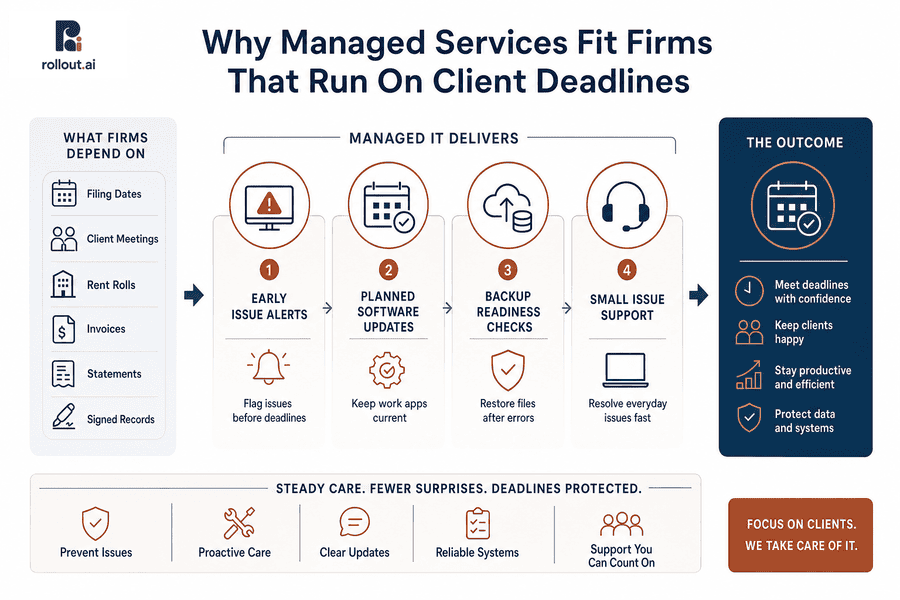
Why Managed Services Fit Firms That Run On Client Deadlines
Filing dates, client meetings, and rent rolls depend on systems that work on time. So do invoices, statements, and signed records. Managed IT means steady care for business technology, not one-time repair after failure. It gives staff clear updates in plain words, so a printer issue or app login does not become a long delay.
Key examples of this include:
-
Early issue alerts: Monitoring can flag a device or system before staff miss a deadline.
-
Planned software updates: Patch schedules keep work apps current.
-
Backup readiness checks: Recovery plans help teams restore files after errors or device trouble.
-
Small issue support: Logins, printers, slow computers, and app access get handled before they pile up.
The IT Managed Services Value Proposition Is Operational Control
The value is not only lower cost. The it managed services value proposition is more control over time, tickets, risk, and planning. Leaders now treat managed services as a strategic focus at 99 percent of organizations, because steady support protects daily work and gives staff one clear place to go.
Examples of this idea are:
-
Less downtime during work: Staff can keep drafting, billing, and serving clients.
-
Faster help for staff: Login or app tickets have a clear owner.
-
Clear monthly cost view: Leaders can see what is included.
-
Better risk visibility: Reports show system health in plain words.
-
Smarter app planning: Cloud apps and AI tools get reviewed before use.
Why Managed IT Services Are Better Than Break-Fix Support
Break-fix support means calling after email fails, a device breaks, or an app stops. Managed IT provides steady care through reviews, alerts, and updates. It also covers backups and user help. That is why managed IT services are better for teams that need improvement ideas, not just repairs after work slows down.
A law office preparing filings loses access to a shared folder before partner approval. Staff lose time, approvals slow down, and client response times slip while the ticket waits. Steady care helps spot repeat access issues during regular reviews.
Those habits lead into the core work of managed IT.
These areas are monitoring alerts, patch schedules, backups, account reviews.
More On Managed IT Services
Why Use Managed IT Services For Security And Continuity
Security is part of daily work. Email, passwords, and old software affect invoices and client files. Access rights and missed backups do too. Verizon’s 2024 Data Breach Investigations Report found that 68% of breaches involved a non-malicious human element, which shows why use managed IT services belongs in practical business planning.
Key examples of this include:
-
Safer sign-in habits: Multi-factor sign-in and account reviews reduce weak access habits.
-
Planned software updates: Patch schedules close known gaps in work apps.
-
Tested backup plans: Recovery checks confirm files can be restored.
-
Plain security reviews: Leaders get clear reports without tech speak.
Keep Client Work Moving
Rollout AI helps MSPs deliver steadier support, clearer ownership, and fewer workflow delays when client deadlines are on the line.
Why Managed IT Services Support Growth And Better Planning
Growth adds pressure. More staff, more devices, more cloud apps, and more client data need clear owners. The U.S. IT services market generated USD 446.0 billion in revenue in 2025, which shows how much firms now rely on outside support. That is why managed IT services help with workflow, app support, and vendor follow-up. They also help with device setup and safer AI planning.
Examples of this idea are:
-
Staff starts and exits: New hires get accounts and app access, while former staff lose access on time.
-
Office and remote devices: Computers stay tracked, updated, and ready.
-
Cloud app support: Billing, records, and approval apps have a clear support path.
-
AI workflow review: Tools are checked for data safety and useful tasks before staff rely on them.
Why Managed Services Providers Should Be Judged By Clarity
Support partners vary in scope, speed, reports, and follow-through. Changing IT support can feel hard because leaders must compare contracts, staff needs, and risk. That is why managed services providers should be judged beyond monthly price. Ask how tickets, security work, vendor calls, and invoices are handled before there is an urgent issue.
Key examples of this include:
-
Promised response time: Know how fast staff hear back after a ticket is opened.
-
Included daily work: Confirm support for logins, devices, apps, and printers.
-
Extra ticket costs: Ask which issues create added fees.
-
Security report format: Require plain language leaders can use.
-
Escalation ownership: Name who works with app, phone, and cloud vendors when an issue grows.
Managed Services Importance For A More Reliable Workday
The managed services importance is clearest in the daily work that keeps client service moving. Fewer disruptions and faster fixes help staff serve clients with less delay. So do stronger security habits, clearer costs, and better planning. The work shows up in billing runs, document access, and account approvals. It also shows up in device setup and support tickets.
Businesses ready to move from IT chaos to smoother operations can contact Rollout AI for a practical review. Rollout AI supports managed IT, cloud, and application support. Its model includes a dedicated point of contact, monthly tech stack reviews, and unlimited small tickets. It also uses non-technical communication that keeps next steps clear. That gives the next stuck invoice or app login issue a clear owner before it slows the day.